Background
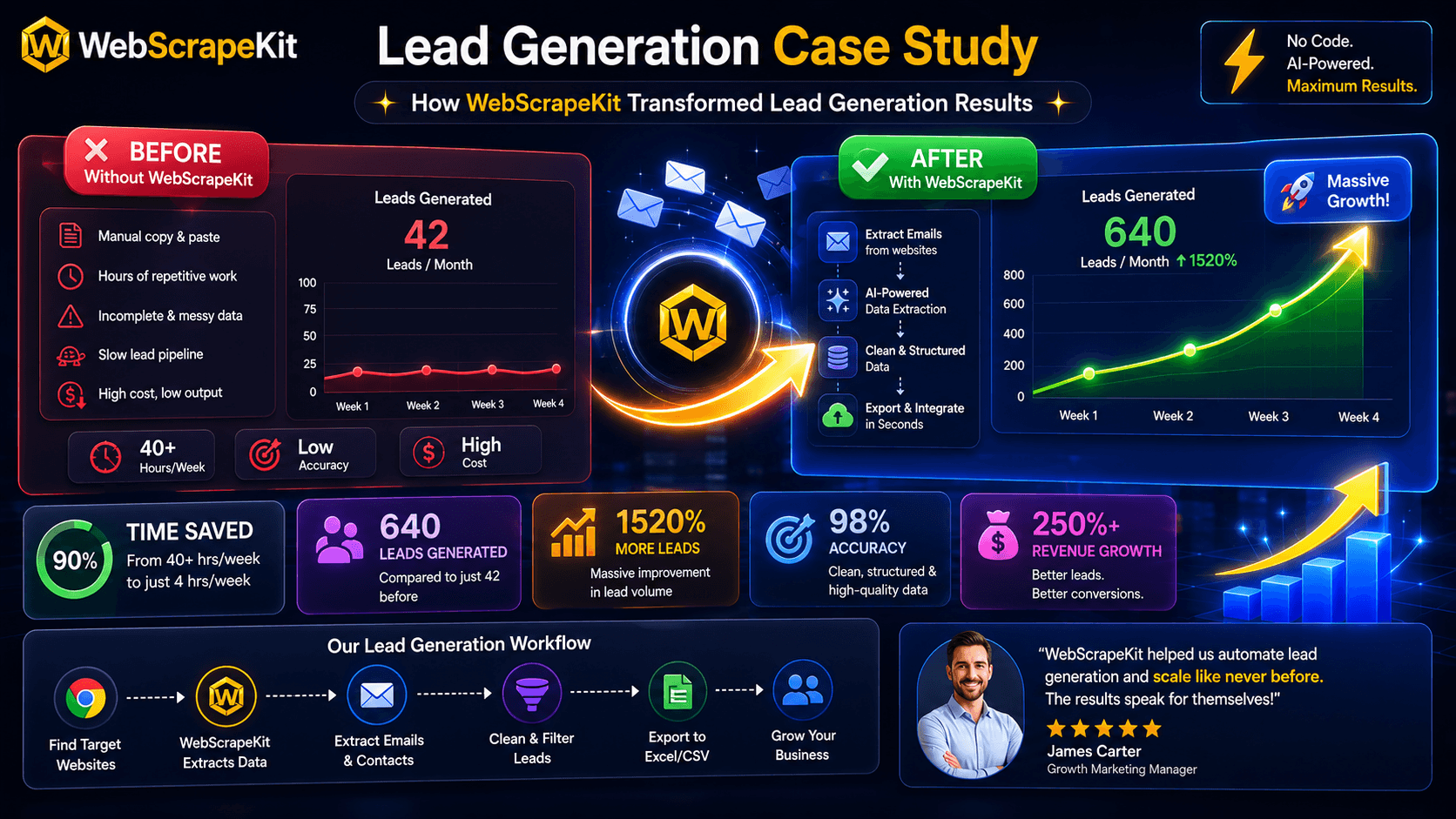
This case study follows a small B2B services company - a three-person digital marketing consultancy - that was struggling to generate consistent leads for a new service offering targeting local restaurants and hospitality businesses.
Their previous approach: manually searching Google, clicking through individual restaurant websites, and copying email addresses into a spreadsheet. This process was taking 10 to 12 hours per week for one team member - an unsustainable drain on a three-person team.
The Challenge
The company needed to build a list of 500+ qualified local business contacts with email addresses, complete this process in a fraction of the time currently spent on manual collection, do it without a budget for expensive lead data providers (they had been quoted $800 to $1,200 for similar data from a list service), and maintain data quality and relevance.
The WebScrapeKit Solution
Week 1 - Source Identification: Identified high-value source pages for their target market: local chamber of commerce business directories, regional restaurant association member listings, city tourism board hospitality directories, and Yelp category pages for their target city.
Week 1 - First Extractions: Ran WebScrapeKit email extraction on each source page. Exported to CSV. Combined into a master spreadsheet.
Week 2 - Data Validation: Reviewed extracted emails for relevance, removed duplicates, and verified a sample of addresses manually. Data quality was high - over 90 percent of extracted emails were valid and relevant.
Week 3 - Outreach Launch: Uploaded the validated list to their email marketing platform and launched a personalized cold outreach sequence.
The Results
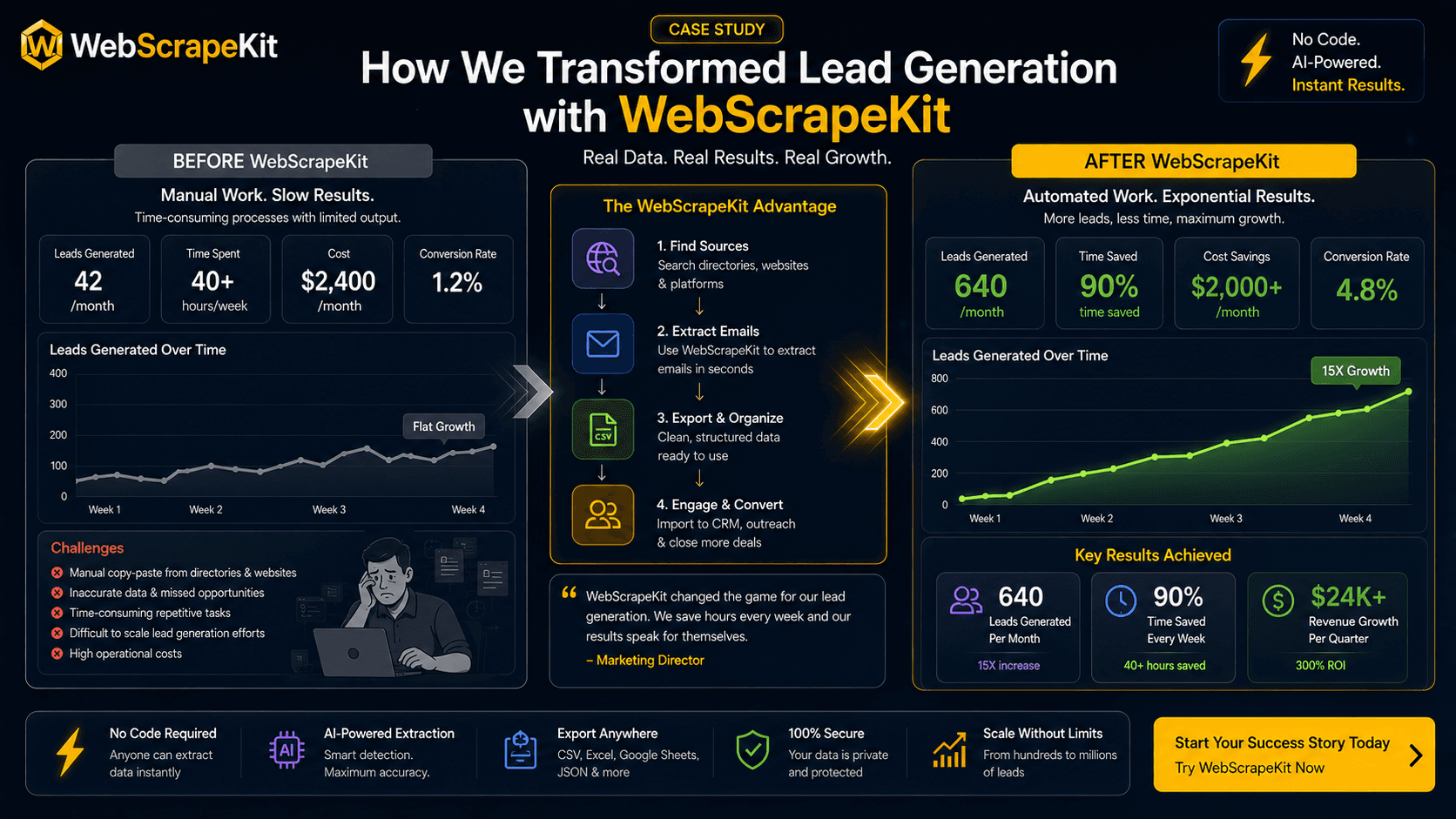
Time saved: Lead collection time dropped from 10 to 12 hours per week to approximately 45 minutes per week - a reduction of over 90 percent.
List size: The company built a qualified list of 640 local hospitality contacts in two weeks - more than they had collected in the previous three months combined.
Cost savings: The list was built at zero cost using WebScrapeKit, compared to the $800 to $1,200 quoted by data providers for similar coverage.
Response rate: The cold outreach campaign achieved a 12 percent response rate - above industry average for cold email.
New business: Over the three months following the outreach campaign, the company closed four new clients directly attributable to the WebScrapeKit-sourced leads, generating approximately $24,000 in new contract value.
ROI: $24,000 in new revenue from a tool that cost nothing.
Conclusion
This case study illustrates what's possible when a small business eliminates the data collection bottleneck with WebScrapeKit. The shift from 12 hours of manual collection per week to 45 minutes freed up significant team capacity. The zero-cost list outperformed expensive purchased data.
For small businesses that rely on outreach for growth, WebScrapeKit's email extraction feature represents a meaningful competitive advantage - available for free, starting immediately.
Start building your lead list at WebScrapeKit.com